Hazard | Stratergy | |
Human | · How much kayaking experience do they have? · Can everyone swim? · Experienced with a trangia? · Travel sickness · Tripping and injuring · How many people are in the group? · Does the bus driver have a liscence? | · Prior experience in lessons at school. · Make sure everyone can swim in practical lessons at school. · Have practice cooking challenges at school prior to camp. · Have travel tablets in the first aid kit. · Be sure that the first aid kit is full and has enough antiseptic and bandages · Be sure everyone has brought the consent form back, count them. · Physically check the drivers liscence. Book a driver and a bus through a transport company. |
Equipment | · Holes in kayaks whilst kayaking. · Is there enough kayaks for everyone? · Do the tangias have all required apparatus? · Is the bus serviced? · Is the trailer’s tyers are fully inflated and trailer is suitable for trip. | · Have spare kayaks in a support vehicle. Pack objects that can plug the hole such as heavy duty duck tape. · Know how many people in the group and count kayaks prior to departure. · Check over the trangias prior to departure. Replace all missing sections of trangias. · Book through a transport company. · Check over trailer prior to departure, make sure it can handle weight and pump up tyers. |
Environment | · What about bad weather? · Insect bites · Sunburn | · Make sure that the weather forcast is favourable for the trip prior departure, if not conisder postponing trip. · Pack insect repellent, wear protective clothing. · Pack plenty of sunblock, make sure it is water resistant and a high SPF rating. |
Thursday, June 9, 2011
Risk Assessment

Wednesday, June 8, 2011
Food planning
one the first night on camp my group had rissotto for dinner. This was a dish that worked suprisingly well and we were unlucky not to win the cooking challenge, losing to bangers and mash, a very tight call. with a bit of preparation including cutting up some onion, mushroom and buying diced bacon, preparing packaging so it is water tight and space efficient. Although our meal took the longest to cook I still feel ours was the best on the night. Our meal was healthy and had protein from the bacon and the rice had carbohydrates, and veggies gave the meal plenty of other nutrients such as B vitamins, including riboflavin, niacin, and pantothenic acid, which help to provide energy by breaking down proteins, fats and carbohydrates2. B vitamins also play an important role in the nervous system.


- Pantothenic acid helps with the production of hormones and also plays an important role in the nervous system2.
- Riboflavin helps maintain healthy red blood cells2.
- Niacin promotes healthy skin and makes sure the digestive and nervous systems function properly2.
the next night we had spagghetti bolognese for dinner with penne pasta. this came out of a can all we had to do was cook the pasta and heat the bolognese sauce. Pasta was a good choice for a kayaking camp as it provides plenty of carbohydrate. Pasta was also a suitable choice as it was easy to transport. we didn't have to water proof the sauce as it comes in a can only leaving us with the job of re-packaging the penne, as we wouldn't need a whole bag of pasta between two of us. The Spaghetti Bolognese turned out well and if cooked on the first night may have been a contender.
Another of the meals we had on camp was weet-bix. By no means was this the most creative dish on camp however, it is quick, easy to prepare, easy to clean up after, and most importantly, nutritious. Weet-bix is consumed by many athletes for its protein and high level of carbohydrates. The only problem that we experienced with the weet-bix on camp is one or two were a bit crushed whilst in transit, otherwise weet-bix was a good choice for this camp.
Thursday, June 2, 2011
Navigation
Area reference:
An area reference is a reference to a point of a map that gives you a general area of the point that your looking to find. the area reference is a 4 digit number that will give the the square that the point is located in along the northings and eastings lines.
Grid Reference:
A grid reference is a more detailed version of the area reference, the grid reference gives you six figures and a more exact point in the square given by the area reference. the square given by the area reference is split into 10 both up and across giving the point.
How to take a bearing in real life:
To take a bearing in real life point the travel of direction arrow with the point you are trying to get to. Place 'red in the shed'. Read the bearing off the compass housing that that now lines up with the direction of travel arrow.
How to take a bearing on a map:
To take a bearing on a map line up the side of the compass from the point you want to start from from the point you want to finish at (use something such as a ruler if the compass doesnt reach the second point). Line up the grid lines with the eastings.
How do you walk on a bearing:
To walk on a bearing, line up your direction of travel arrow with the bearing you have. Keeping the compass flat turn your body until you have 'red in the shed'. Walk following the bearing, ensuring you keep 'red in the shed'.
What is a compass?
A compass is an instrument for determining directions, as by means of a freely rotating magnetized needle that indicates magnetic north.
Sections of a compass:

what is a scale on a map?
a scale on a map is what gives you indication of actual distance between points on a map. for example if the scale is 1cm = 1km, then for every cm you measure on the map is equal to 1km in real life. scales are written as ratios
What is a contour line?
A contour line is a line on the map that shows the change in level on the ground. these lines go up in a set distance, for example 20m, for every contour line on the map the ground either rises or falls 20m in height level.
How do you read a contour line?
To read a contour line you must take notice of which way the change in height is written on the page if it is the right way up then the ground is rising in height and if it is upside down the ground is decreasing in height. the dot inside the inner most cricle on a contour line indicate the peak of a hill or mountain.

An area reference is a reference to a point of a map that gives you a general area of the point that your looking to find. the area reference is a 4 digit number that will give the the square that the point is located in along the northings and eastings lines.
Grid Reference:
A grid reference is a more detailed version of the area reference, the grid reference gives you six figures and a more exact point in the square given by the area reference. the square given by the area reference is split into 10 both up and across giving the point.
How to take a bearing in real life:
To take a bearing in real life point the travel of direction arrow with the point you are trying to get to. Place 'red in the shed'. Read the bearing off the compass housing that that now lines up with the direction of travel arrow.
How to take a bearing on a map:
To take a bearing on a map line up the side of the compass from the point you want to start from from the point you want to finish at (use something such as a ruler if the compass doesnt reach the second point). Line up the grid lines with the eastings.
How do you walk on a bearing:
To walk on a bearing, line up your direction of travel arrow with the bearing you have. Keeping the compass flat turn your body until you have 'red in the shed'. Walk following the bearing, ensuring you keep 'red in the shed'.
What is a compass?
A compass is an instrument for determining directions, as by means of a freely rotating magnetized needle that indicates magnetic north.
Sections of a compass:
what is a scale on a map?
a scale on a map is what gives you indication of actual distance between points on a map. for example if the scale is 1cm = 1km, then for every cm you measure on the map is equal to 1km in real life. scales are written as ratios
What is a contour line?
A contour line is a line on the map that shows the change in level on the ground. these lines go up in a set distance, for example 20m, for every contour line on the map the ground either rises or falls 20m in height level.
How do you read a contour line?
To read a contour line you must take notice of which way the change in height is written on the page if it is the right way up then the ground is rising in height and if it is upside down the ground is decreasing in height. the dot inside the inner most cricle on a contour line indicate the peak of a hill or mountain.
Thursday, March 3, 2011
Introduction to Outdoor Ed.
1. Why did you choose this subject?
I chose outdoor ed becuase I enjoy more practical subjects at school and enjoy school camps, this subject can cater for both.
2. What are you looking forward to?
I am most looking forward to the camp however I enjoy the camp prepartation at school including trangia cooking during lessons.
3. What are you not looking forward to?
I am not looking forward to the more theory based side of things as the content can beome repetitive for those who done outdoor living in year 9 and sport and recreation in year 10.
4.What strengths do you bring to the class?
To the class, I bring a positiv attitude and a willingness to participate and learn.
5. What weaknesses will you bring to the class?
My trangia cooking has been known to fail, from time to time...
6. What is an ecosystem?


I chose outdoor ed becuase I enjoy more practical subjects at school and enjoy school camps, this subject can cater for both.
2. What are you looking forward to?
I am most looking forward to the camp however I enjoy the camp prepartation at school including trangia cooking during lessons.
3. What are you not looking forward to?
I am not looking forward to the more theory based side of things as the content can beome repetitive for those who done outdoor living in year 9 and sport and recreation in year 10.
4.What strengths do you bring to the class?
To the class, I bring a positiv attitude and a willingness to participate and learn.
5. What weaknesses will you bring to the class?
My trangia cooking has been known to fail, from time to time...
6. What is an ecosystem?
a system formed by the interaction of a community of organisms with their environment.
7. What is an environment?
the air, water, minerals, organisms, and all other external factors surrounding and affecting a given organism at any time.
Saturday, February 26, 2011
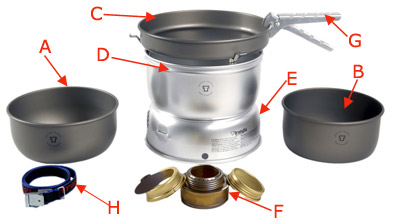
Trangias
Sections of a Trangia
Tips for cooking on a trangia
where you set up your tangia:
The cooking challenge was held on the grandstand. My group cooked banana pankcakes, the only problem with which was that we plan sufficiently enoughand therefore we ran out of butter to ensure the pancakes did not stick to the pan. This was the only problem and i feel that this was only a minor setback that we got around through the borrowing of others butter, and the banana pancakes were successful fort the cooking challenge.
Cooking challenge (camp)
The cooking challenge was held on the first night of the camp. My group cooked rissotto and I feel that ours was the best dish onthe night.This was the most creative dish on the night and we were unluckyto comes second,to bnangers and mash.
Set Includes:
|  |
Tips for cooking on a trangia
- burn out all metho before packing up, if you don't, metho will leak through your tangia.
- put a drop of water in the metho to reduce blackness on pans/bowls.
- when frying tabs need to be up.
- when boiling tabs need to be down.
- flame needs oxygen to survive.
where you set up your tangia:
- safe distance from tents.
- good idea to form a traniga circle.
- flat surface.
- don't leave trangia unnattended.
- never spray oil on pan while cooking.
- never move trangia.
- wait for trangia to cool down before packing up.
- Never leave food scraps in your tangia over night.
- Use hot water to clean items.
- Never wash in water source (e.g river)
The cooking challenge was held on the grandstand. My group cooked banana pankcakes, the only problem with which was that we plan sufficiently enoughand therefore we ran out of butter to ensure the pancakes did not stick to the pan. This was the only problem and i feel that this was only a minor setback that we got around through the borrowing of others butter, and the banana pancakes were successful fort the cooking challenge.
Cooking challenge (camp)
The cooking challenge was held on the first night of the camp. My group cooked rissotto and I feel that ours was the best dish onthe night.This was the most creative dish on the night and we were unluckyto comes second,to bnangers and mash.
Kayaking
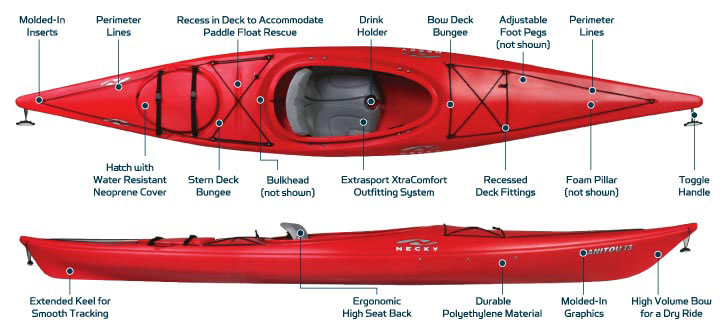
A kayak is not a canoe. a canoe accomdates two or more people, has a more open cockpit,a nd uses an oar instead of a paddle. This kayak is not a leisure kayak either, as leisure kayaks you sit on, rather thatn in, have no storage space, and are smaller in length than the kayak shown above.
When kayaking 8 important things to bring include:
- water
- food
- tent
- spare clothes
- first aid kit
- map
- safety equipment
- sunscreen
- what do I need vs. what do i want.
- how much space do I have vs. how much room will they take up.
- Do I need all this weight? - even weight at each end. How can I make things lighter?
- 3 vital things = water, food and shelter
- Where is the space?
- Where do I fit?
- Am I going to be comfortable?
- Think about small packages (little bags rather than big ones)
- Are things water proof?
- What really needs to be waterproof?
- Will it really matter if it gets wet?
- how to waterproof? - double bag - snap lock bags are a good way to keep things dry if your kayak gets water in it.
- Where does it all fit?
- When do I need it? - least needed should be put in first
- DONT'T WASTE SPACE
- keep cokpit clear
Tent Prep
- Trees - don't set up directly under trees. Beware of branches snapping, sap and bird dropping when camping near trees.
- Rocks - don't set your tent up with rocks underneath.
- Tents - set up your tent correctly, be aware of your surroundings, be at least 50m from water.
- Gully - dont set your tent up in a gully as rain may cause flooding.
- Fire - at least 20m from tents, controlled, watch for wind.
- Sun - where it rises and sets
- Wind - if possible wind should hit side of tent.
- River - 50m from water.
- slope - if flat ground is unavialable sleep on the slope with your head on the high side.
Monday, February 21, 2011
First Aid Scenarios
1. Adam walking through the woods
- check for danger as you approach.
- screaming suggests that he is responsive and breathing so his airways are obviously clear.
- circulation is apparent.
- won't require defibrillation
- doughnut bandage around the bone, keep it in place with second bandage (second bandage must not go over protruding bone)
- seek medical assistance
- DR ABCD not required
- take ben inside
- place his fingers under him armpit, to warm with body heat
- place in warm water after warming up
- use gloves to warm hand on the way to medical help
- check for danger
- chack response to ensure consciousness
- ABCD are clear
- take victim out of the sun (i.e indoors or in the shade)
- sit her down
- monitor victim
- provide cool flannel to cool herself
Thursday, February 17, 2011
Leadership
Leadership
Five things that make a good leader are:
· Strong voice and good communication
· Good decision making
· Listens to others
· Has the ability to control however isn’t over controlling
· Is able to back up what they say with action.
As a leader I admire Steven Gerrard. I admire his leadership as he leads by example, and his communication around the park compliments this so everyone can see and hear what he wants done. His actions on the park can be so influential and he can lift the entire team with a strong personal performance, it is often a case of, if he is playing well, his team plays well. Steven has been at the club his entire professional career and he has made himself a true leader at the club by leading off the field as well being involved in many board decisions to help shape things the way he wants them and the way he feels it will most benefit the team.
Some people are born leaders, when the situation arises they are always front and centre taking control. These kinds of people are usually very outgoing and friendly, however this is not always the case some of the best leaders are quiet and lead by their actions. Some people are also born followers they would prefer to stand at the back and be told what to do rather than be out the front making decisions and risking being blamed for leading the group onto a mistake.
Subscribe to:
Posts (Atom)